
Rock solid MIDI clock for professional music production and live performing
Born from real musician struggles, high attention to detail, and deep engineering expertise, the Nome II master clock redefines timing precision for studio and stage.
With clock jitter down to <0.005μs, it gives musicians, DAWs, and hardware a meticulous, unwavering pulse to build high-quality musical experiences upon.
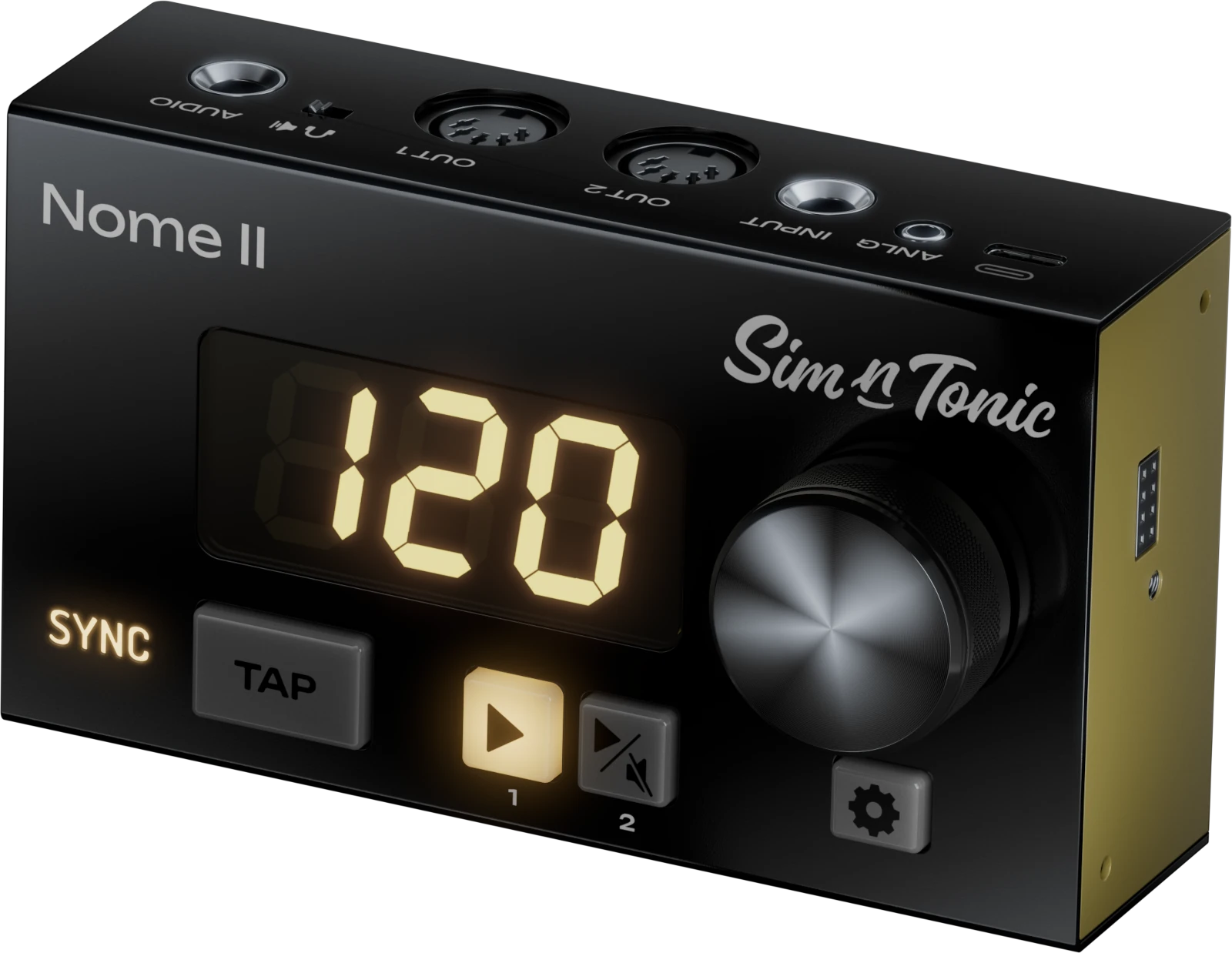
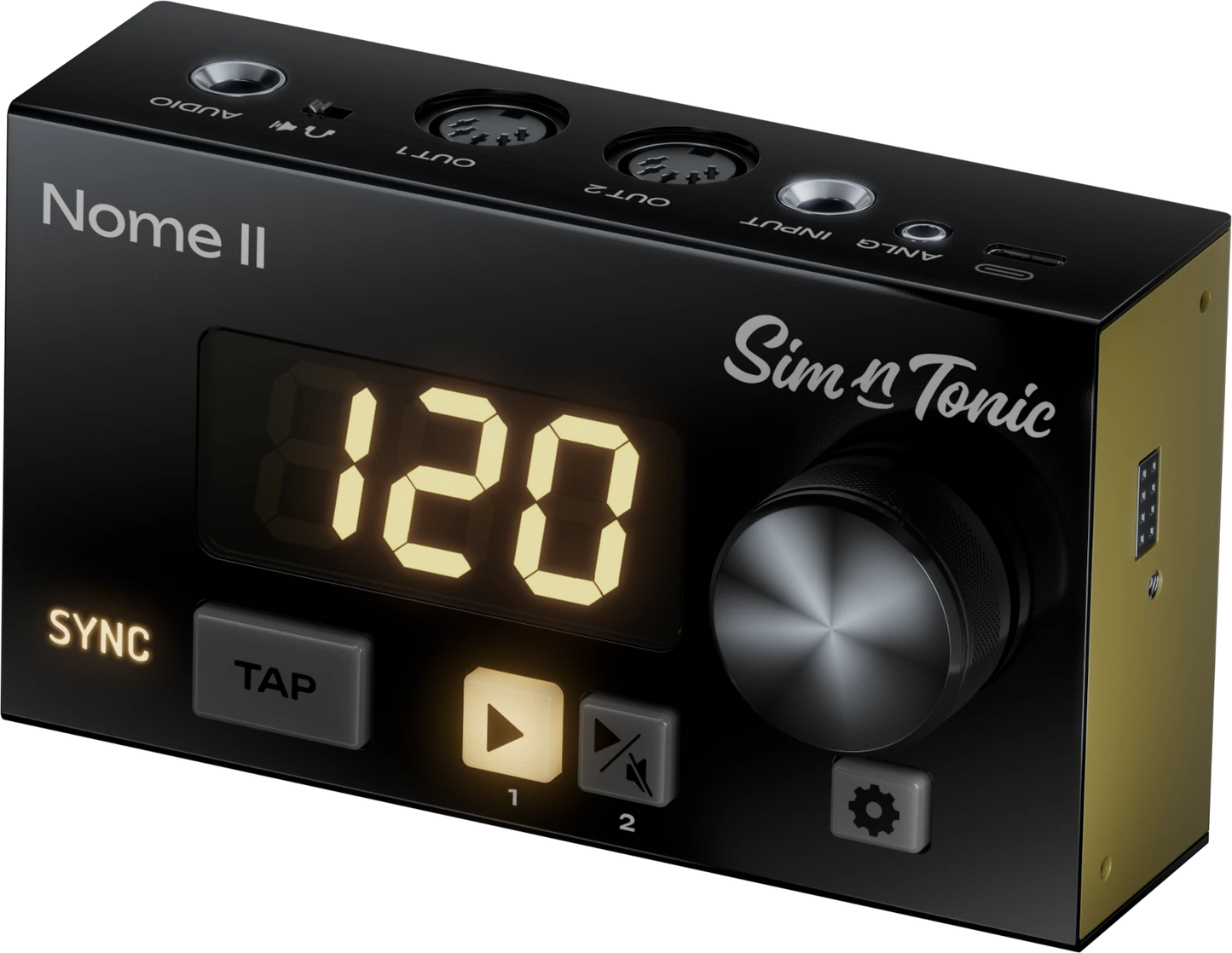
Nome II
Please check our Shipping Policy for more info.
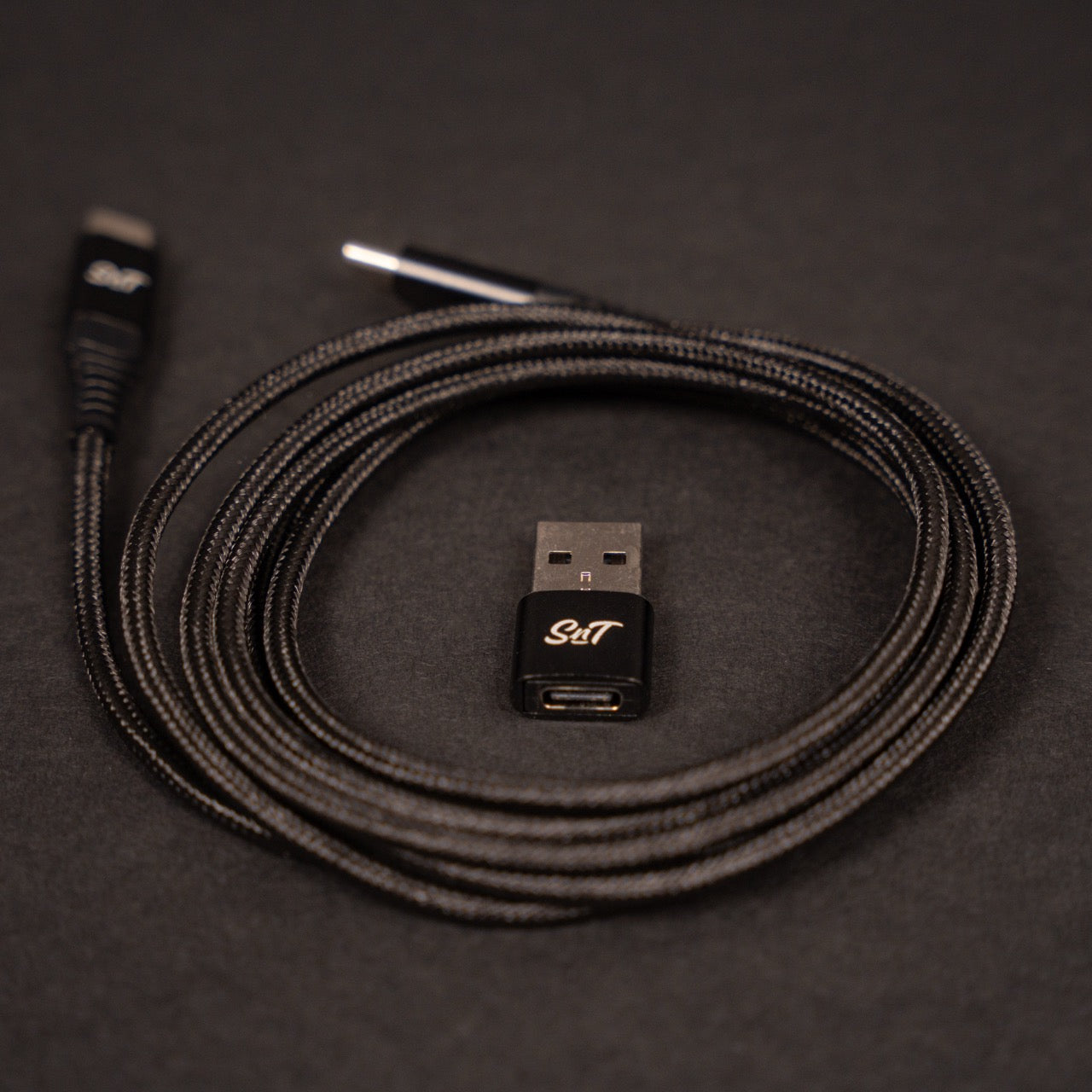

For recordings with no admin
Tight DAW integration
Nome II is compatible with more than 10 DAWs, including Ableton, Bitwig, Cubase, Pro Tools, Logic, and more, ensuring recording sessions do not require additional admin in moving clips.

For musicians that value precision
<0.005μs jitter
With less than 0.005μs jitter, Nome's clock is far more precise than your DAW's MIDI clock.
This means recordings land on the grid from the moment you press play.

Unshakable stability
No drift
At the start of a session, every element locks perfectly in sync - modular rack, MIDI sequencer, and vintage drum machine.
With Nome II, they stay that way: less than 1 sample of drift over 24 hours.
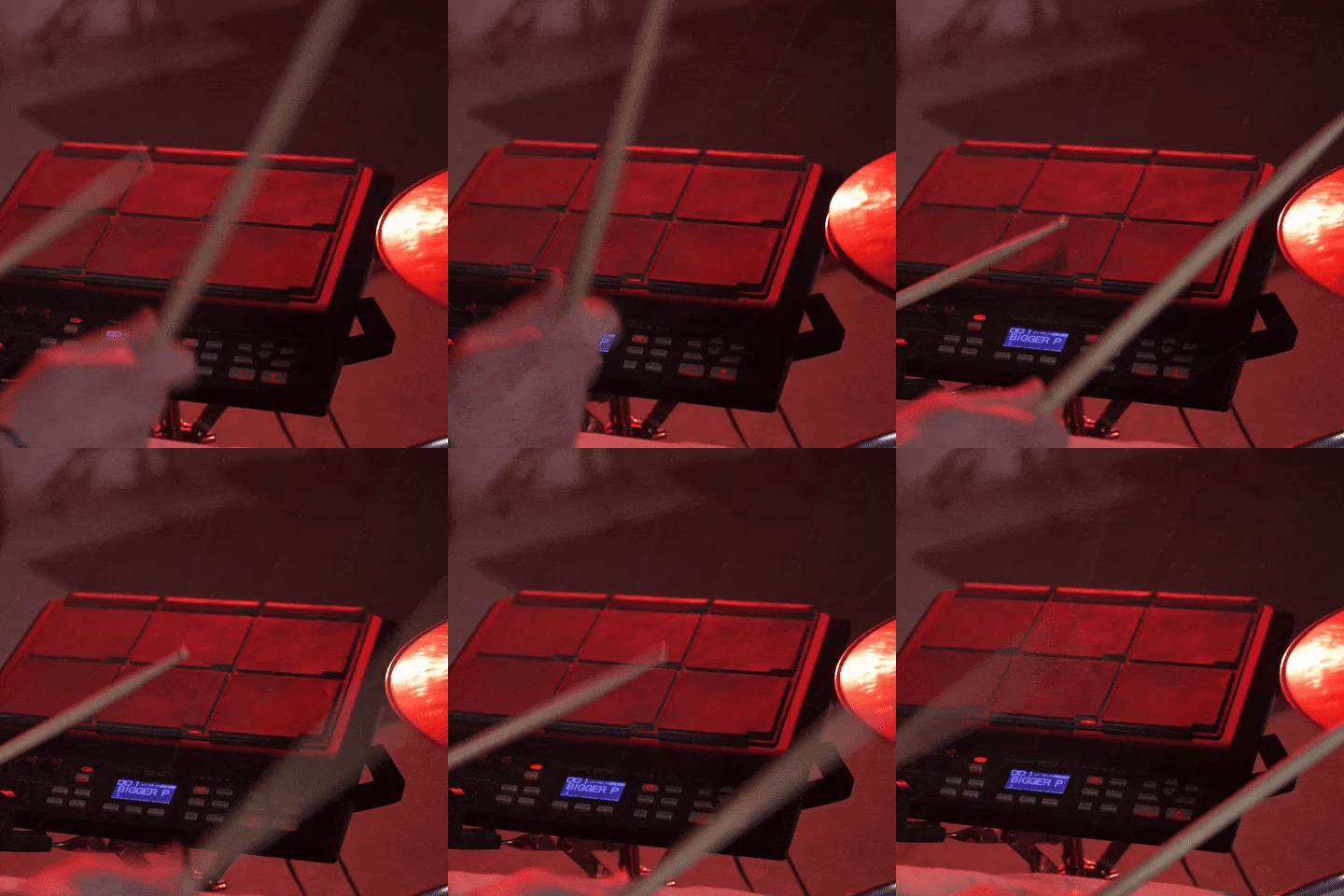
Bringing every stage element together
Musicians and gear in unison
Nothing sounds worse than a live band out of time.
Nome's metronome syncs musicians and rigs together to deliver an on-point performance.
A computer freezing should not break the entire gig and the drop should hit the audience exactly when you want it to.

For diverse setups that need to flow together
Analog, MIDI, and DIN Sync working together
It is often complicated to nail the timing on gear that runs of technology from different eras.
With Nome you get two analog clock outputs with configurable speed from 1 to 24 parts per quarternote. You can also configure them as DIN Sync clock output to sync your beloved TR-909 or vintage Korg drum machine.

Master the master clock
Custom configuration and presets
Nome is designed to be configured around your workflow, with settings you can switch between depending on whether you're performing or composing.
Song tempos can be saved to the 100th decimal, custom metronome sounds can be added, output functions are configurable, and presets are triggered on demand - every parameter is placed under your control.

Built for reliability inside and out
Tour-proof hardware and firmware
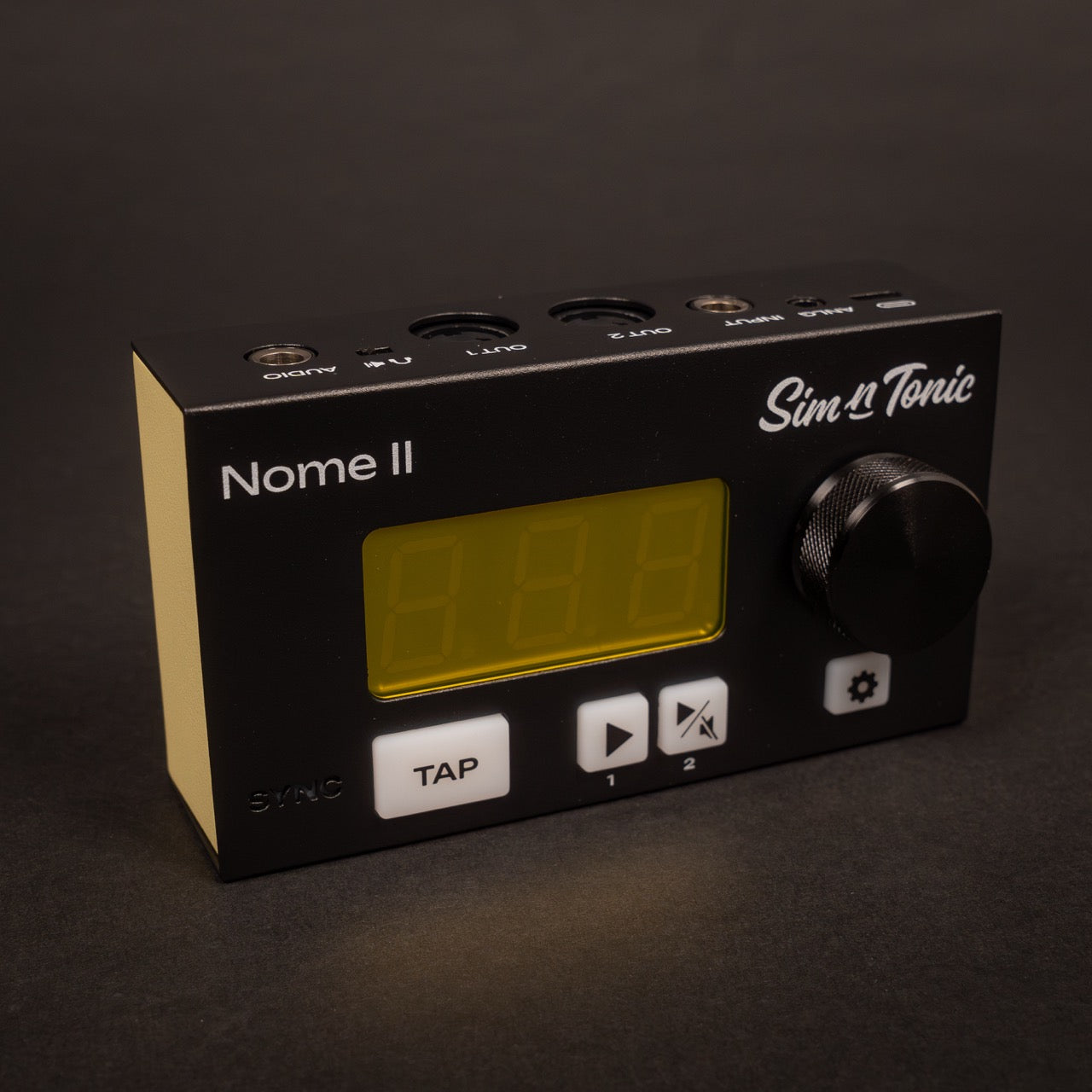
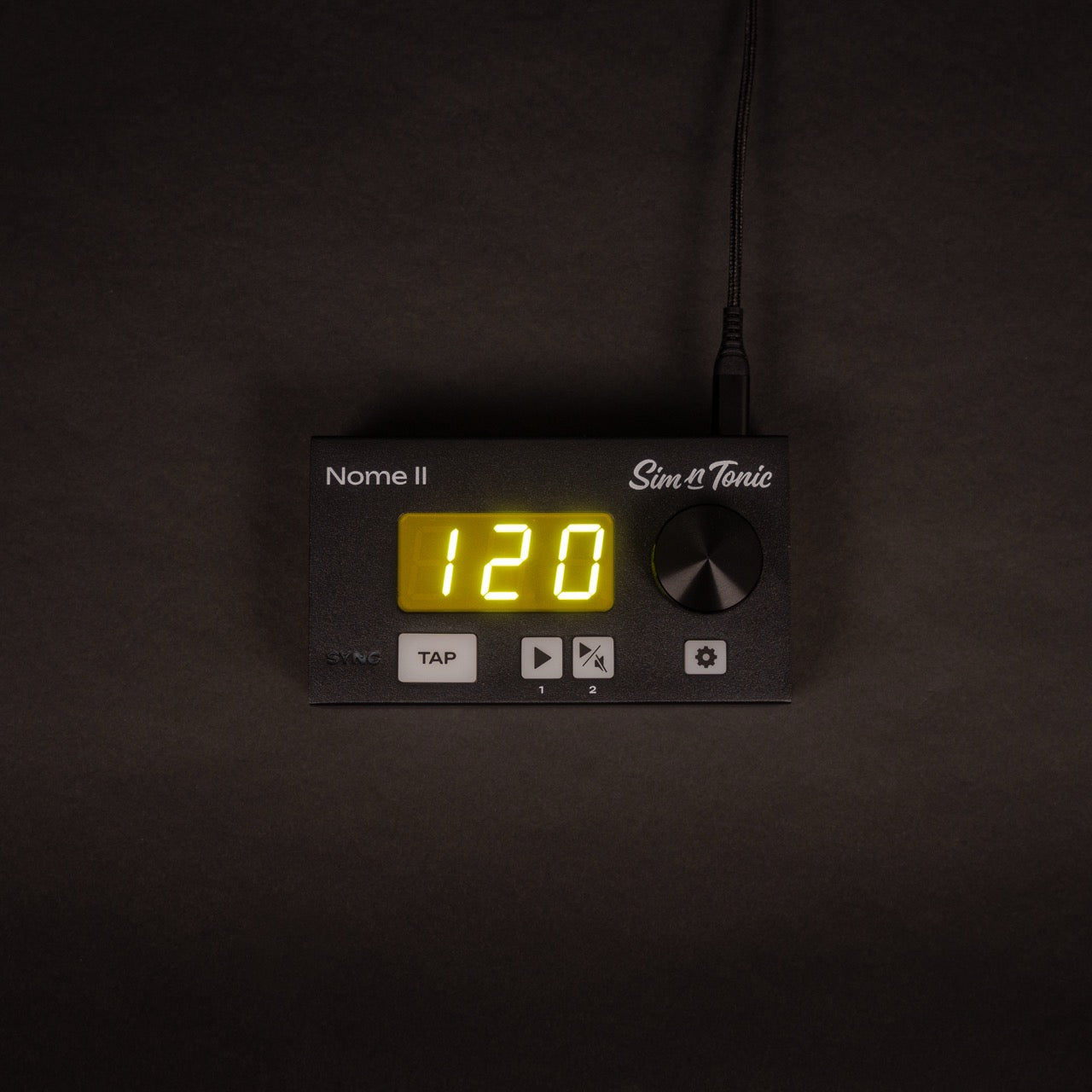
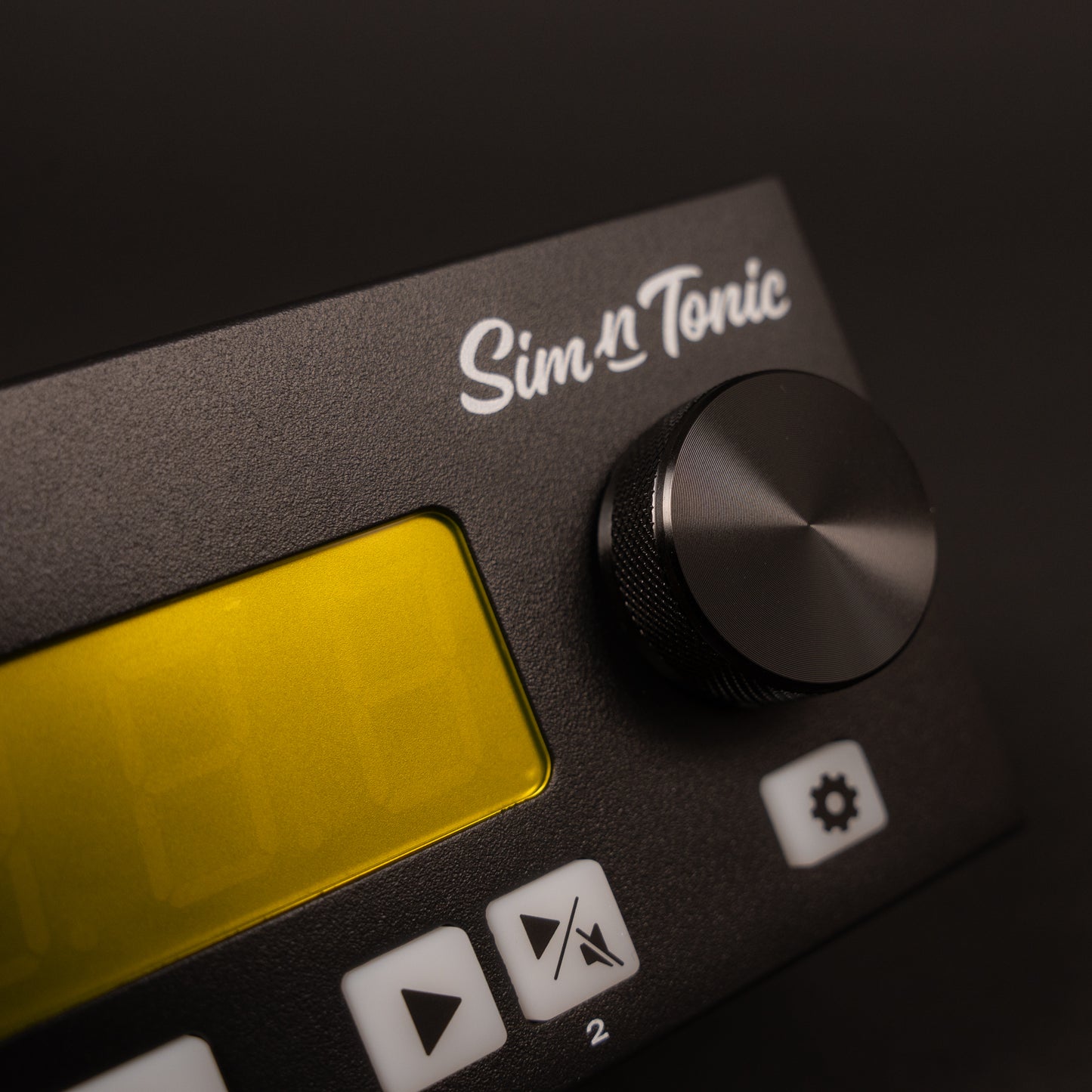
Nome II's metal case withstands long tours and longer gigs, the display stays legible on a dark stage, and the controls are spaced and weighted so changes happen without fumbling or mis-presses mid-set.
The firmware is even more solid - only three reported bugs since v1.0 released in April 2023.
Which means that once it's set, you can forget about clock breakdowns on stage.
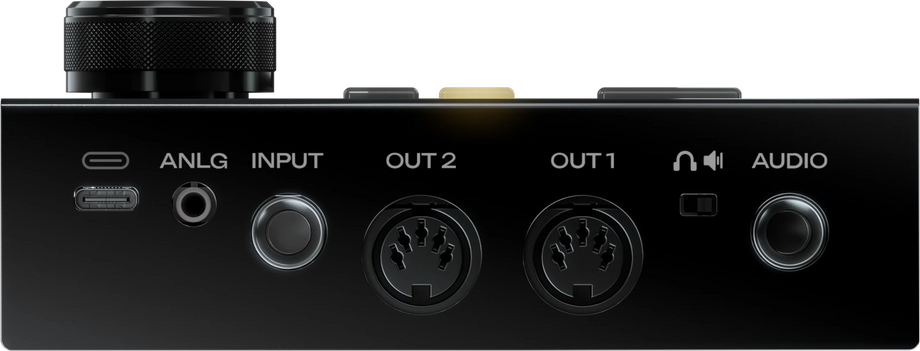
Focus on musicality, Nome's got the timing locked.
Recommended by industry experts:
-
 Read the full review
"The Sim’n Tonic Nome II is exactly what it claims to be: a simple, stable and precise MIDI master clock that solves the synchronization problems that have frustrated hardware-oriented musicians for as long as MIDI has existed."
-
 Read the full review
"If you’re tired of fighting timing drift, puzzling over MIDI offset settings, or fighting against recordings that won’t line up, this box takes all that friction out of the process."
-
 Read the full review
"Anyone who has tried to synchronize a DAW and multiple external devices with perfect timing knows how tedious it can be. Nome II solves this problem by bringing all devices together and ensuring precise synchronization."


Technical Specifications

Tempo
| Tempo | 30 to 400 BPM |
| Tempo Decimals | Down to the 100th decimal (for ex. 125.64 BPM) |
| Time Signature | Any signature in /2, /4, /8 or /16 with a whole amount of quarters |
Physical Connections
| Outputs |
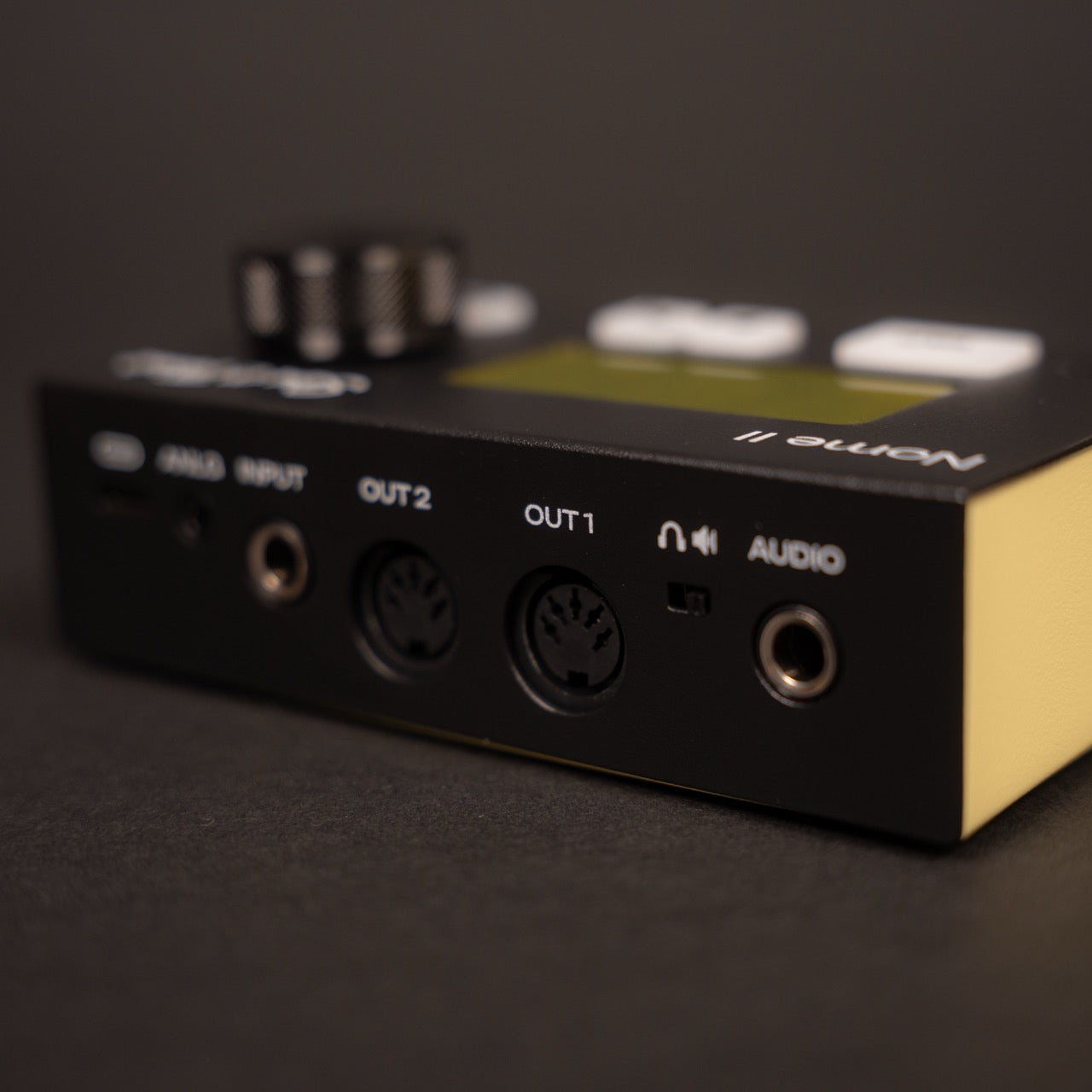
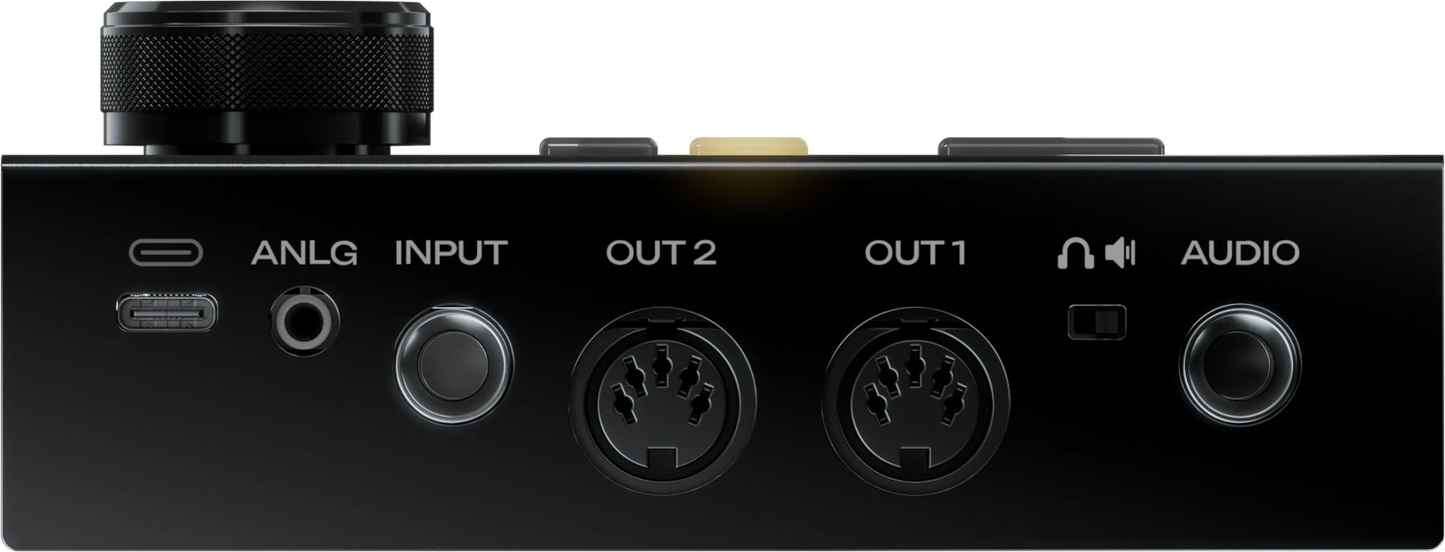
2x MIDI Outputs - DIN 1x ANLG Clock (3.5mm stereo TRS - 2 outputs) 1x AUDIO (6.35mm stereo TRS) |
| Inputs | 1x USB-C plug (power & communication) device only 1x Multi-function input (6.35mm stereo TRS - 2 inputs) |
| Other | 1x Add-on Module interface (on the side) for future expansions |
MIDI
| MIDI Outputs |
No-load voltage 3.3V Follows MIDI Specification Compatible with MIDI-powered devices |
|
MIDI Messages |
Constantly: F8 (MIDI Clock) Start: F2 00 00 (MIDI SPP 0), FA (MIDI Start) Stop: FB (MIDI Stop) followed by Bx 7B 00 (All Notes Off) Resync: FB (MIDI Stop) followed by Start + any other forwarded MIDI message |
|
MIDI Clock Jitter |
< 0.005µs (5ns) when running as Master clock < 0.05µs when using U-SYNC No jitter added from other MIDI messages (smart merging) |
| USB-MIDI |
Class Compliant 3 input interfaces:
3 output interfaces:
|
| USB-MIDI Commands | Change tempo and time signature Mute/unmute metronome Change analog clock speed Start/stop/resync sequencers Apply Tempo Presets |
| Forwarded MIDI messages | All except Realtime MIDI Max SysEx data size: 500 bytes |
Analog Clocks
| CV/Analog clocks |
2 independent outputs (stereo jack) 5ms pulse 0-5V Configurable speed from 1ppq to 24ppq |
| DIN Sync (sync24) |
Compatible with Roland vintage devices Requires an adapter from TRS to DIN Sync |
Audio Metronome
| Metronome sound |
60 built-in click sounds + 4 custom sounds (upload using computer) Has subdivisions with time signatures in /8 or /16 Adjustable sound for downbeat, 8th and 16th notes |
| Max. Audio Level |
Balanced Line Out: +13 dBu Headphones: 15 mW + 15 mW at 32 Ω |
| Audio volume |
9 volume levels +/-6dB steps Adjustable volume for downbeat, 8th and 16th notes |
Multi-function Input
| Possible functions |
Pedal/Footswitch Drum Pad/Trigger as Tap Tempo External sync to regular analog from 1 to 24ppq |
| Pedal functions |
Mute/Unmute Play/Stop Tap Tempo Change Tempo Preset |
| Accepted pedal type |
Momentary (typical sustain pedal) Latching (typical guitar amp footswitch) |
| Momentary pedal polarity | Both (automatically detected) |
Sync with DAWs
| MacOS & Windows |
Sync using U-SYNC Only USB cable needed to sync the Nome Bidirectional sync (change tempo + start from either Nome or DAW) Adjustable latency +/- 100ms Jitter < 0.05µs |
Other
| Tempo Presets |
50 Presets Saves BPM and Time Signature Can be recalled with buttons, pedals, or MIDI Commands |
| Smart Tap Tempo |
Tap Tempo matches both speed and "phase" Smart averaging of the taps |
| Count-in / Count-off |
Count-in: machines start 1 bar after pressing play Count-off: tap one bar to set the tempo and start your machines |
| Play/Stop Modes |
Play on the next bar Play right away and reset metronome |
| Play/Mute Buttons |
Configured as 2 play buttons, one for each MIDI port (default) Configured as one play button and one mute button Play button can act on both ports or only Port 1 |
| Power Source | USB Bus Power - 5V |
| Current consumption |
80mA average (default brightness 300) 250mA average (maximum brightness 800) 350mA peak (without add-on module) Asks for 500mA from USB host |
| Dimensions (WxDxH) | WxLxH: 132x75x37mm (without knob/buttons, height with knob: 52mm) |
| Weight |
Product alone: 362g With packaging: 586g |
Expand your setup without losing timing precision
Nome's clock does not deteriorate when sent through MIDI-thru devices. By chaining two Nome II's you can easily sync up to 20 devices.


Professionalism is in the details
Notes are a sequence, so which one comes first makes or breaks a good melody.
Nome provides the unshakable timing base needed for creativity to build without technical issues getting in the way.
For musicians who value their time, it frees up capacity to create by making sure clock is one less thing to worry about.
Approved by professionals across industries
-

Greg Tripi, movie music composer (Drive, Our Father, Manhunt: Unabomber, and more)
My studio relies on multiple eurorack clocks, modular synth fx, and tempo synced delay pedals, to create the elements I use for my film and television scoring work.
I’ve tried to find the perfect master clock for years… and finally the Nome II came around. The synchronization in my modules is better than ever.
Having 2 discrete analog clock sources, combined with MIDI clock, is the perfect combination." -

Ludwig A.F., Germany-based, electronic musician, producer, and DJ
"Thank you for making the Nome II, it’s the easiest way to clock things in my studio and it works exactly as it should."


Nome II
Please check our Shipping Policy for more info.
-

Stage-ready and travel-durable
-

Designed in Denmark
-

2-year product guarantee


Still got some questions?
FAQ

Can I use Nome II with my device?
If your device has a MIDI input port and can follow (slave to) MIDI Clock, then yes. If not, check if your device can follow other types of clocks (for example analog clocks).
Can I use it to start my device?
If your device reacts to MIDI Start/Stop commands or an analog run gate, or a start trigger, then yes, you will be able to control it from Nome II.
Note that most arpeggiators need to be "played", i.e. the timing of the arp will match the Nome's, but you still need to press the keys at the right time to start it on time.
What if my device does not have any MIDI input ports?
Nome II also sends analog clock for modular synths, and many synths and sequencers have an input called “sync” which would accept these clocks. It also sends a MIDI clock on its USB port, which can be sent to a computer or any USB host (for example a phone or tablet with an OTG adapter).
What if my device does not have any input ports at all?
If your device cannot follow any kind of clock, you can make it send regular audio pulses (1-24ppq) and Nome II will follow, sending clocks to your other equipments.
Can I sync my Pioneer DJ equipment?
Yes but it’s not easy – see the question above. You can also use the Time nudging and smart tap tempo to "match" the timing of your equipement manually.
Can I sync more than 2 MIDI devices?
You can easily attach a “MIDI Thru” box to sync many devices. Or you can also use the “Thru” port on your devices, which will forward the MIDI data further. Or you can sync multiple Nomes together.
Does it have an audio metronome?
Yes! With subdivisions, support for time signatures in /8, /16, adjustable volume and sound for downbeat, 8th notes, 16th notes, and possibility of uploading custom sounds!
Can I sync my vintage synth, f.ex. a TR606?
Absolutely, using a small adapter to connect the ANLG plug of Nome II to the clock input of your 606.
Can I use it to record my hardware synths in my DAW?
Yes! If you’re on Mac you can use the brand new state-of-the-art U-SYNC software, which syncs over USB. On Windows you can use an "audio sync track", which is generated by our VST plugin, then send the audio to the Nome's "INPUT" plug. In both cases you should be able to adjust latencies to get recordings perfectly on the grid in your DAW.
Please note this syncs the Nome to your DAW, to sync your machines you still need to sync them to the Nome (using MIDI or Analog clock).
Is Nome II suitable for DAWless Live usage?
Definitely, it was even designed for it! Where to start? Strong metal case, large knob, bright display, remote control, audio metronome, customisable, and more!
I have another question!
Please check out the general FAQ, or ask the Sim’n Tonic community on Facebook or the Forums (links on the Support page), where our founder Simon is often very active.